How to Stop Pigmentation Getting Worse This Summer

Every summer, without fail, I see the same pattern in clinic. A patient comes in with dark spots or an uneven skin tone that has clearly got worse since the warmer months began. They have been using their usual skincare. They may even have been using SPF. And the pigmentation has still deepened.
The reason this happens is not always obvious — and fixing it requires understanding a few things about how UV radiation and hormones interact with the cells that make pigment in your skin.
Why Pigmentation Gets Worse in Summer
Your skin produces pigment through cells called melanocytes. These cells are present in the deepest layer of your epidermis and produce melanin (the pigment that gives skin its colour) in response to specific triggers. The two most relevant triggers for most women I see are UV radiation and hormonal fluctuation.
UV radiation, particularly UV-A (ultraviolet A, the longer-wavelength, year-round UV that penetrates through glass and clouds), directly stimulates melanocytes to produce more melanin. This is the tanning response, and it is protective in design. The problem for pigmentation conditions like melasma (a pattern of brown patches typically across the forehead, cheeks, and upper lip) and post-inflammatory hyperpigmentation (PIH — the dark marks that remain after a spot, eczema flare, or skin injury has healed) is that the melanocytes involved are already overactive. UV exposure does not cause them to produce a controlled amount of melanin. It pushes an already overstimulated system further.
Visible light — specifically high-energy visible light (HEV, also called blue light, in the 400–450nm wavelength range) — adds another layer. It stimulates melanin production through a different receptor pathway, one that is particularly active in darker skin tones. This means that for some people, even diligent SPF use will not fully prevent summer pigmentation worsening, because standard SPF products do not block visible light. Tinted sunscreens containing iron oxide pigments do.

Heliocare 360° Pigment Solution Fluid SPF 50 — formulated for pigmentation-prone skin. PA++++.
The third factor is hormonal. Oestrogen stimulates melanocytes. For women in perimenopause, when oestrogen fluctuates significantly before eventually declining, melanocyte activity becomes less regulated. Melasma that was stable can flare. Pigmentation that was dormant can reactivate. Combined oral contraception and HRT can have similar effects for the same reason.
The Foundation: SPF Is Not Optional, It Is the Treatment
This is not marketing copy. Every clinical guideline on pigmentation management starts in the same place: broad-spectrum SPF 50, applied daily, reapplied during UV exposure. Without it, nothing else works reliably. Topical actives, chemical peels, and in-clinic treatments suppress or slow pigmentation. UV exposure undoes the work faster than the treatment can do it.
Heliocare 360 Pigment Solution Fluid SPF 50
£25.50

PRIORI Tetra fx251 SPF 50
£87

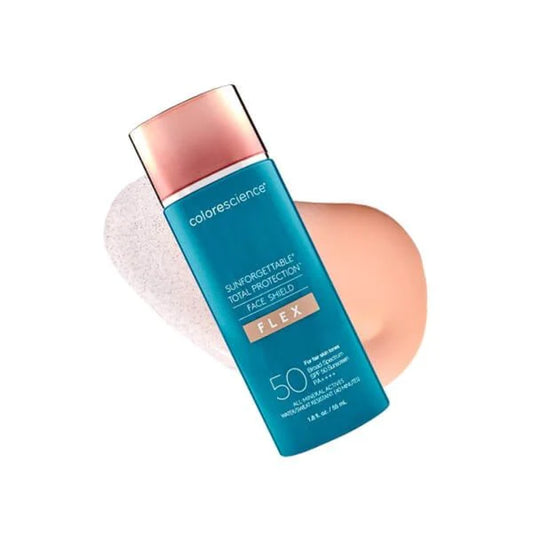
Colorescience Face Shield SPF 50
£39

Colorescience Mineral Sunscreen Brush SPF 50
£46
The specific SPF requirements for pigmentation are more demanding than for general use:
- SPF 50 or above
- High UV-A coverage — four or five UV-A stars, or PA++++, or broad-spectrum label. UV-A is the primary melanocyte stimulator.
- Iron oxide-containing tinted formula if possible, especially for melasma or Fitzpatrick skin types IV to VI (skin of colour). Iron oxide blocks visible light, which is an independent melanogenesis trigger.
- Reapplication every two hours during outdoor daylight exposure — including through windows in a car or office, where UV-A still penetrates.
- Year-round, not just in summer — UV-A is present on cloudy November days just as it is in June.
Two products I specifically recommend for pigmentation-prone skin:
Heliocare 360° Pigment Solution Fluid SPF 50 — formulated specifically for pigmentation management. SPF 50 with PA++++, and an active formula designed to both protect and support existing pigmentation treatment. Lightweight fluid. £25.50.
PRIORI Tetra fx251 Broad Spectrum SPF 50 — tinted mineral SPF with HEV shielding and DNA repair enzymes.
PRIORI Tetra fx251 Broad Spectrum SPF 50 — tinted mineral formula with iron oxide for visible light protection, plus HEV shielding, DNA repair enzymes, and antioxidant coverage. Excellent for melasma and pigmentation-prone skin that also wants a light tint finish. £87.
Colorescience Sunforgettable Total Protection Face Shield SPF 50 — mineral formula with broad-spectrum UV-A and UV-B plus blue light (HEV) and pollution defence. The universal tint is suitable for all skin tones. A strong daily option for pigmentation management. £39.
For reapplication over makeup during the day (which is non-negotiable for melasma):
Colorescience Mineral Sunscreen Brush SPF 50 — brush-on mineral powder that adds SPF coverage mid-day without the faff of reapplying over foundation. £46.
What Else Actually Helps
SPF is the foundation. These are the ingredients and treatments that build on it:
Colorescience Sunforgettable Total Protection Face Shield SPF 50 — mineral, broad-spectrum with HEV and pollution defence.
Vitamin C (L-ascorbic acid): Applied in the morning, under SPF. Vitamin C reduces the activity of tyrosinase (the enzyme in melanocytes that controls melanin production) and also provides antioxidant protection against UV-A-generated free radicals. You want at least 10% L-ascorbic acid in a stable formulation (i.e., it should not be orange or brown when you buy it).
Niacinamide: This does not reduce how much melanin is made, but it reduces how much is transferred from melanocytes to surrounding skin cells — which is what makes the pigmentation visible. Four to 5% niacinamide has good clinical evidence. Ten per cent is better for more significant pigmentation.
Azelaic acid: Works by inhibiting tyrosinase (the melanin production enzyme). Ten per cent is available without prescription. It is well tolerated in skin of colour and safe in pregnancy — which distinguishes it from many other pigmentation-active ingredients.
Microneedling and chemical peels: For established pigmentation that is not responding to home care alone, in-clinic treatments can accelerate results significantly. Microneedling stimulates controlled skin renewal and can reduce PIH markedly over a course of treatments. Chemical peels with glycolic acid (an alpha hydroxy acid) or mandelic acid are effective for both melasma and general skin tone. Both must be combined with rigorous SPF before, during, and after treatment.
At Debora Tentis Clinic, Microneedling Skinpen Skin Booster (£130) specifically targets pigmentation, acne scars, and texture. The Advanced Happy Skin Facial includes professional-grade chemical exfoliation and is adapted to individual skin concerns.
Colorescience Mineral Sunscreen Brush SPF 50 — brush-on SPF 50 reapplication over makeup without disturbing your base.
The Hormonal Layer
If your pigmentation has got noticeably worse in the last few years and you are in your late thirties or forties, it is reasonable to ask whether hormonal change is contributing. Fluctuating oestrogen in perimenopause reduces the regulation of melanocyte activity. The UV exposure is triggering a response that a younger, hormonally stable version of your skin would have handled differently.
This does not mean there is nothing to do about it. It means addressing the trigger (UV, including visible light) is even more important, and that looking at the full picture — skin barrier, hormonal status, inflammatory load — alongside topical treatment gives you the best outcome.
If you want to understand what is driving your pigmentation and build a strategy around it, a Happy Skin Holistic Consultation at Debora Tentis Clinic looks at skincare, treatments, nutrition, and hormonal context together.
Pigmentation is one of the most frustrating skin concerns to manage because progress is slow, setbacks are fast, and summer is a genuine risk window every year. The good news is that the strategy is clear. SPF every morning, reapplied, with the right UV-A and visible light coverage. Active ingredients in the right order and concentrations. In-clinic support when home care reaches its limit. And understanding what your hormones are doing underneath all of it.
Shop the Products in This Post
Heliocare 360 Pigment Solution Fluid SPF 50
£25.50
PRIORI Tetra fx251 SPF 50
£87
Colorescience Face Shield SPF 50
£39
Colorescience Mineral Sunscreen Brush SPF 50
£46
Debora Tentis is a Women's Health Pharmacist and Independent Prescriber Trainee based in Milton Keynes. This content is educational and does not constitute personalised medical advice. For concerns about skin pigmentation or unusual pigmented lesions, please consult your GP or a qualified dermatologist.
deboratentis.com | Instagram: @deboratentis