Skin Barrier Repair After Summer: The Complete Product Guide

By the second week of August the same message arrives, worded slightly differently every time. My skin has gone weird.
Tight after washing. Stinging when a serum goes on that never stung before. Red in patches that take their time settling down. Dry across the cheeks and congested along the jaw, on the same face, in the same week.
Nothing in the routine has changed, which is the part that confuses everyone. The products are the same products. It is the skin underneath them that is different.
The bit most people get the wrong way round
Three months of sun, heat, air conditioning, chlorine and sweating through sun cream wear down the skin barrier. That is the outermost layer, only a few dozen cells thick, and its entire job is to hold water in and keep irritants out.
When it is worn, two things happen at once. More water escapes, so skin feels dry and tight no matter how much you drink. And more of everything else gets in, including the actives that were perfectly comfortable in May.
So your skin has not suddenly become sensitive. It is temporarily less able to cope. That distinction matters, because a skin type that has genuinely changed needs a new routine, and a worn barrier needs the routine you already own, minus about half of it.
The instinct in August is to do more. A stronger active, a new acid, something corrective. It is almost always the wrong move, and adding a tenth product to fix the problem caused by the other nine has never once worked.
August is a repair month, not a resurfacing one.

How to tell if it is actually your barrier
Not every unhappy skin is a worn barrier, so here is what one actually feels like.
It stings or tingles when you apply something that was fine a month ago. It feels tight for a while after washing, not just for a moment. It looks red or blotchy and stays that way longer than it used to. It is rough and flaky on the surface while still breaking out underneath. Make-up sits badly on it and separates by lunchtime.
If three or more of those are true, a worn barrier is far more likely than a skin type that has changed overnight. Which is good news, because a barrier repairs itself. It mostly needs you to stop interfering with it.
The four ingredients that do the repairing
If you take one thing from this post, take this list. These are the four names to look for on a label, and none of them is exotic or expensive.
Ceramides. These are the fats that make up roughly half of everything holding the outer layer of your skin together. Think of skin cells as bricks; ceramides are most of the mortar. They fall with age, they fall faster as oestrogen declines through perimenopause, and they are reduced in eczema-prone skin from the start. One useful detail the marketing skips: ceramides work best alongside cholesterol and free fatty acids in roughly equal measure. A label that quietly lists all three beats one that shouts "ceramide" on the front and nothing else.
Glycerin. The most evidence-based moisturising ingredient in skincare, and it costs almost nothing. It pulls water into the outer layer within minutes, it does not sensitise anyone, and it is safe in pregnancy and in eczema. Look for it in the first five or six ingredients, which tells you there is a meaningful amount in there rather than a token drop.
Squalane. This is the stable version of squalene, which your own oil glands already make and which accounts for about 13 to 15 per cent of your skin's natural oil. It is light, it does not block pores, and it is chemically inert, so it will not react with anything else you put on. It is the rare emollient that suits oily skin and reactive skin at the same time.
Panthenol, also called provitamin B5. The soothing one. At 1 to 5 per cent it calms redness and irritation and supports the skin in repairing itself, with a very low risk of reacting to it. There is a reason it turns up in almost every post-procedure cream in every clinic in the country.
And one more that nobody puts on the front of the box, because there is no glamour in it. Plain petrolatum, the white soft paraffin in a tub of Vaseline, reduces water loss through the skin by up to 98 per cent. Nothing else comes close. A thin layer as the last step at night, over your moisturiser, outperforms a great many things costing thirty times as much. It does not block pores either, whatever the internet insists, because the molecules are far too large to get into one. Do keep it away from naked flames, though. All paraffin-based products are flammable and that is a genuine safety warning rather than a legal one.
What to take out for a fortnight
This is the harder half, and it is free.
For two weeks: no acids, no retinoid, no vitamin C serum, no exfoliating anything, no cleansing brush, no hot water. Three things only. A gentle cleanser, a plain moisturiser, and your sun cream.
Most sensitised skin settles in that time without a single new product. If it does not settle, that tells you something useful, and I would get it looked at properly rather than carry on guessing.
The routine you have been running all summer is not wrong. It is just too much for the skin you have this month.
If your barrier has been struggling since long before the sun got involved, stress is the other common cause and it works through exactly the same route: What Stress Actually Does to Your Skin.
What I would reach for first

SkinBetter Refresh Hydration Boosting Cream
£90.00

AllSkin Med Barrier Recovery Cream
£84.00

Senté Daily Soothing Cleanser
£30.00

Biretix Hydramat Hydrating Fluid
£26.00
Which product for which skin
Dry, tight and reactive. SkinBetter Refresh Hydration Boosting Cream, £90. This is the one that maps most directly onto the list above: skin-identical ceramides, a patented lipid complex that works alongside them, glycerin, and niacinamide. It is light for a barrier cream, which matters if you have spent years avoiding anything rich.
Genuinely compromised, or recovering from a treatment. AllSkin Med Barrier Recovery Cream, £84. Made for a barrier that has been through something, including in-clinic work. This is the one I reach for when skin has been pushed too hard rather than simply dried out.
Very dry, or skin that has thinned with age. AllSkin Med GF Replenishing Cream, £70. Richer and more nourishing, with growth factors and firming peptides doing a separate job alongside the hydration.
Oily and congested, but still tight. Biretix Hydramat Hydrating Fluid, £26. Oil-free, mattifying, and it hydrates for up to 72 hours. August does this to oily skin as reliably as it dries out dry skin, and a heavy cream is not the answer to it.
Cleansers, which matter more than people think. Senté Daily Soothing Cleanser, £30, is built for reactive and post-procedure skin and does not leave that tight feeling. Exuviance Gentle Cream Cleanser, £34.50, is a milky, soap-free one that also takes make-up off. AllSkin Med Hydrating Cleanser, £34, suits normal to dry skin as a daily.
SkinBetter and AllSkin Med are professional-only ranges, so they do not go through the normal checkout. There is a form for them instead. You choose what you want, I check it against your skin, your history and anything else you are already using, and then I send you a payment link. Nothing is charged or sent until you have paid, and the whole thing takes about five minutes.
That review step is not admin for the sake of it. These are active, medical-grade formulations. Some are not suitable in pregnancy, some interact with prescription skincare you may already be on, and some are a poor idea on skin that is reacting right now, which is the entire subject of this post.
Texture, budget, and where I would not spend
Texture is not a vanity question. The best moisturiser is the one you will actually use twice a day, and if you hate the feel of a rich cream you will quietly stop after four days. If you like light, go for the SkinBetter Refresh or the Biretix fluid. If you like rich, go for the GF Replenishing Cream. Neither choice is more clinical than the other.
On budget, here is the honest version. Glycerin, panthenol and squalane are cheap ingredients and a good pharmacy own-brand delivers them perfectly well. I do not currently stock a squalane oil or a panthenol gel, and I am not going to pretend a £90 cream is the only route to two ingredients you can buy for six quid on the high street.
Where the money genuinely buys you something is the ceramide and lipid formulations, where the ratio of the three fats and the way they are delivered differ a great deal between products, and sun protection, where you will get through a whole bottle and the finish decides whether you wear it.

Sun protection is still doing most of the work
Two things people get wrong in late August.
The first is thinking the job is over. UV-A, the wavelength responsible for most photoageing, stays at a fairly constant level all year round and goes straight through glass. September and October are not a holiday from it.
The second is the amount. SPF, which stands for sun protection factor, is measured in a laboratory using a set quantity of product, and almost nobody applies that much. For a face, it is a quarter to a third of a teaspoon, or two strips of product run down the length of your index and middle fingers held together. Halving the amount does not halve your protection, it gives you roughly the square root of it. SPF 50 applied at half the tested amount behaves like about SPF 7. Reapply every two hours if you are outdoors.
Which one depends on your skin, not on the number:
- Redness and flushing. Heliocare 360° A-R Emulsion SPF 50, £25.50, formulated for skin that runs red.
- Oily and blemish-prone. Heliocare 360° Oil-Free Gel SPF 50, £22.50, or the Acnimat, £24.
- A nicer finish for daily wear. Heliocare 360° Sensation SPF 50+, £28.
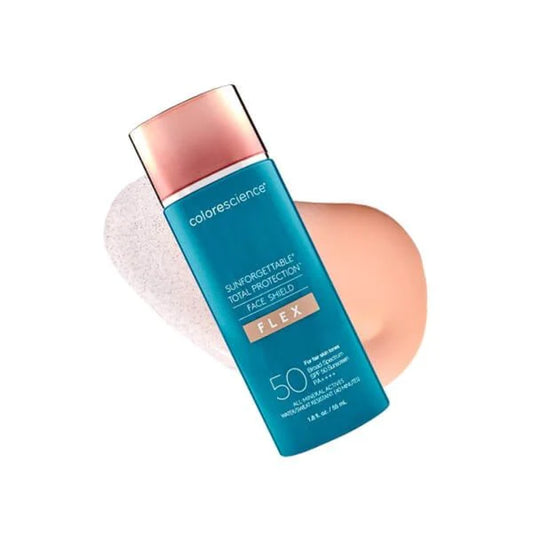
- Tinted, so it replaces a base. Colorescience Sunforgettable Total Protection Face Shield SPF 50, £39, in classic, matte or glow.
- Reapplying over make-up, which is the step everybody skips. The Colorescience brush, £46, is the only version of this that people stick with, because it takes eleven seconds and does not ruin your face.
What helps from the inside
I am going to go in order of how much I would actually rely on each one, which is not the order the supplement aisle would give you.
Protein and food first. Repairing a barrier means building new cells and new fats, and that needs raw material. A day at 40g of protein is not rescued by a sachet of anything. This is the least exciting sentence in the post and the most useful one.
Vitamin C. Vitamin C contributes to normal collagen formation for the normal function of skin, and it helps protect cells from oxidative stress. Those are authorised claims, meaning they have been assessed and permitted rather than invented by a brand. Zooki Liposomal Vitamin C, from £2.50 a sachet.
Vitamin D. Contributes to the normal function of the immune system. In this country most of us are running low from about October, and the government advice to consider supplementing through autumn and winter applies to almost everyone. Zooki Liposomal Vitamin D and K2, from £2.50.
A multivitamin, if your diet is genuinely patchy. Zinc and biotin both contribute to the maintenance of normal skin, and they are two of the more common gaps in women eating on the run. Zooki Women's Multi Liposomal Capsules, £39.99.
Collagen, and here is the honest part. Collagen has no authorised health claim in the UK, which tells you something on its own. The trials that exist are mostly small, mostly short, and mostly funded by companies selling collagen, and they measure skin hydration and elasticity on a machine rather than anything you would notice in a mirror. I am not telling you not to take it. I am telling you not to buy it instead of sun cream.
If you do want it, two I stock or recommend: Zooki Super Strength Marine Collagen 11,000mg, from £3.50 a sachet, and the Elavate Multi-Collagen Superblend, which is my favourite of the powders for the ingredient mix: 8,090mg of marine, chicken and bovine collagen with 300mg of liposomal vitamin C alongside it. Code Debora takes 15 per cent off.
I am an Elavate ambassador, so I should say that plainly: they send me product and I work with them. I would rather you heard it from me, and it is the same reason I have just spent a paragraph telling you that collagen has no authorised health claim in this country.
Your two-week reset
Morning. Rinse with lukewarm water, or a gentle cleanser if you need one. Moisturiser onto slightly damp skin, which gives the glycerin something to hold. Sun cream, properly, two fingers' worth. That is the entire routine.
Evening. Gentle cleanser. Moisturiser. On the worst nights, a thin layer of plain petrolatum over the top and nothing else.
Nothing else at all for fourteen days. No acids, no retinoid, no vitamin C serum, no exfoliating, no new product bought in a moment of panic at 11pm.
Week three. Bring one active back, twice that week, and leave everything else out. If it stings, it is too soon and you have lost nothing by waiting another week. Then add the next one the same way.
Most people find they do not put all of it back, and their skin is better for it. That is not a failure of the products. It is what a routine looks like when it is built for the skin you have rather than the skin you had in June.
If your skin has been unhappy for months rather than weeks, or nothing above has touched it, that is a conversation rather than a purchase. You can book an appointment on the website and we will work out what is actually going on.
Debora
Women's Health Pharmacist and Independent Prescriber Trainee
Shop the products in this post
Senté Daily Soothing Cleanser
£30.00

Exuviance Gentle Cream Cleanser
£34.50

AllSkin Med Hydrating Cleanser
£34.00
SkinBetter Refresh Hydration Boosting Cream
£90.00
AllSkin Med Barrier Recovery Cream
£84.00

AllSkin Med GF Replenishing Cream
£70.00
Biretix Hydramat Hydrating Fluid
£26.00

Heliocare 360° A-R Emulsion SPF 50
£25.50

Heliocare 360° Oil-Free Gel SPF 50
£22.50

Heliocare 360° Sensation SPF 50+
£28.00

Colorescience Total Protection Face Shield SPF 50
£39.00

Zooki Liposomal Vitamin C
From £2.50

Zooki Liposomal Vitamin D and K2
From £2.50

Zooki Women's Multi Liposomal Capsules
£39.99

Zooki Super Strength Marine Collagen 11,000mg
From £3.50
If the collagen section left you wanting the full version, including how much is actually in the trials and what the label will not tell you: How Much Collagen Do Women Actually Need?