Menopause Skin and Hair Changes: What Happens and What Helps

You put on the same moisturiser you've used for years, and by lunchtime your face feels tight again. Your foundation sits differently. There's more hair in the plughole than there used to be, and your parting looks a bit wider in the bathroom mirror. And nobody warned you that menopause would show up on your face and your head as well as in your sleep.
Skin and hair changes are some of the most common things women notice in perimenopause and after menopause, and some of the least talked about. They're real, and they have a cause: your skin and your hair follicles have hormone receptors, so when your hormones change, they change too.
So here's what actually happens, what helps at home, what in-clinic treatments can and can't do, and when a change needs checking.
What happens to your skin after menopause
Oestrogen helps your skin make collagen, the protein that keeps it firm and thick. It also helps your skin hold water and keeps its protective outer layer, the skin barrier, working well. When oestrogen falls, all of that slows down.
The biggest change is collagen. Research suggests skin can lose around 30% of its collagen in the first 5 years after menopause, and the loss carries on more slowly after that. That's why so many women notice their skin looks thinner, less firm and more lined over quite a short time, even if their routine hasn't changed at all.
Blood flow to the skin drops a little too, so it can look duller, and cuts and grazes can take longer to heal.
Dry, itchy and thinner: why your skin feels different
With less oestrogen, your skin makes less of the natural moisturisers that keep it plump, including hyaluronic acid, and loses water faster. So it gets drier, and it gets irritated more easily. Products you've used for years can suddenly sting.
Some women get itchy skin with no rash at all, and some get a crawling or tingling feeling, as if something is moving on their skin. That can be part of menopause too, and around 1 in 5 women in midlife report it. If you have eczema or rosacea, menopause is a common time for them to flare, and flushes and rosacea redness can make each other worse.
And in early perimenopause, some women get spots again for the first time since their teens. Later on, as all the hormones fall, the spots usually settle and the dryness takes over.

What helps at home
You don't need a 10-step routine. 3 things done well cover most of it: protecting your skin, repairing it and renewing it.
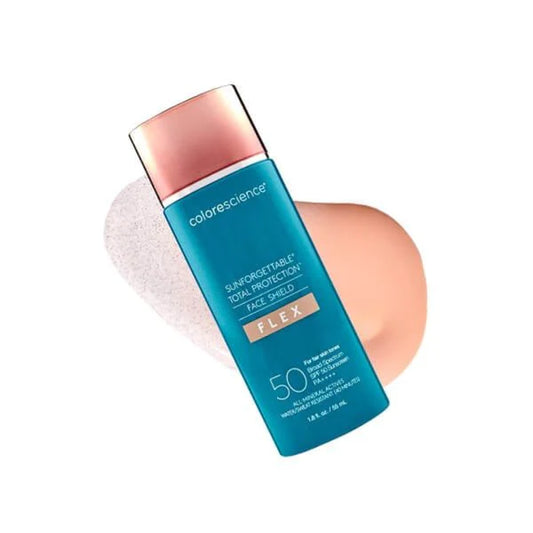
Protect: SPF every morning, all year round. UVA, the part of sunlight that breaks down collagen and darkens pigmentation, comes through clouds and windows every day of the year. With less collagen being made, protecting what you have is even more important now. Look for SPF 30 or higher, ideally 50, with 4 or 5 stars for UVA. A tinted mineral one, like Colorescience Face Shield Flex, is easy to wear instead of foundation.
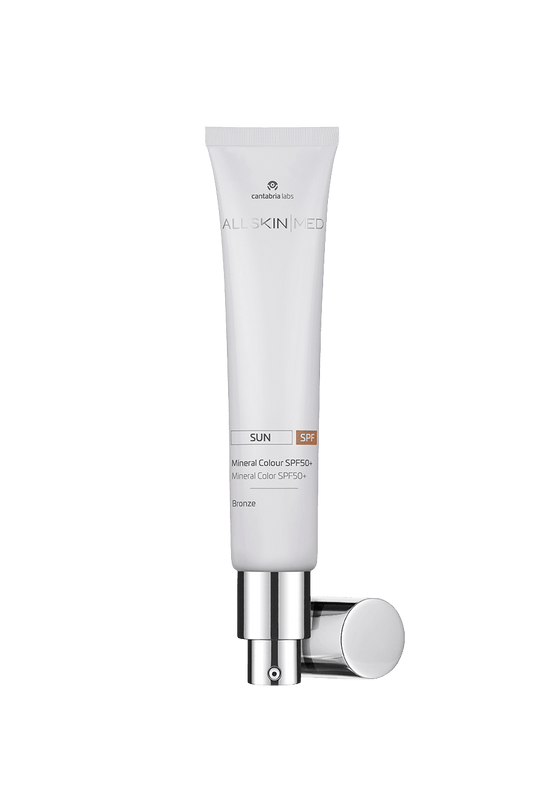
Repair: look after your skin barrier. Use a gentle cleanser, keep showers warm rather than hot, and put moisturiser on while your skin is still damp. Look for ceramides, glycerin or shea butter on the label. If your skin is already tight and stinging, AllSkin Med Barrier Recovery Cream is made to repair a barrier that's been through a lot.
Renew: a retinoid, slowly. Retinoids, the vitamin A family, have more evidence behind them than any other skincare ingredient for fine lines, texture and uneven tone, and they can help skin make more collagen. They can sting and flake for the first few weeks, so start 2 or 3 nights a week and build up. If your skin is already sore, settle the barrier first. SkinBetter AlphaRet Overnight Cream is made to be kind to sensitive skin, and AllSkin Med R Advanced Renewal Serum is a mid-strength retinol. Leave retinoids out if you're pregnant, trying to get pregnant or breastfeeding, and keep your SPF on every morning.
Related reading: if you want the science behind oestrogen and your skin, I've written about it in more detail here.
What about collagen supplements? The research is mixed. Some studies suggest they may help skin hydration and elasticity, and many women like them, but they won't replace what oestrogen did. If you want to try one, I've written about how much collagen women actually need. The one I stock is Zooki Super Strength Marine Collagen. It's made from fish, so leave it out if you have a fish allergy.
 Face Shield Flex
Tinted mineral SPF
 Barrier Recovery Cream
For tight, stinging skin
 AlphaRet Overnight Cream
Retinoid plus a gentle acid
 Marine Collagen
Zooki
Thinning hair: what's going on
There are 2 main kinds of hair loss women notice around menopause, and they often overlap.
Gradual thinning on top. Your parting gets wider and the hair on the crown gets finer, but your hairline at the front stays where it is. This is female pattern hair loss, and it's very common: up to 40% of women over 50 have some. Oestrogen helps keep hair in its growing phase. When it falls, some hair follicles become more sensitive to the small amount of testosterone women make, and the hairs they grow get finer and shorter. Your testosterone level is usually normal; it's the follicles that react differently. It also runs in families, on either side.
Shedding all over. More hair in the brush, the shower and on your pillow, from all over your head. This is usually telogen effluvium, when lots of hairs move into their resting phase at the same time and then fall out. It typically starts 2 to 4 months after a trigger, so the cause is easy to miss: an illness, a stressful time, quick weight loss, a big change in diet, low iron, a thyroid problem, or a change in hormones or medicines. The good news is that this kind usually grows back once the cause is sorted.
And some women notice the opposite problem: more hair on the chin or upper lip. That's the same change in balance between oestrogen and testosterone.
What helps your hair
Check your iron and thyroid first. Low iron stores are one of the most common things behind thinning and shedding, even when you're not anaemic. The test is ferritin. Ask for the number, not just "normal", because many women's hair does better when ferritin is well above the bottom of the range, and that's what I aim for. A thyroid that's running too slow or too fast can thin your hair too. Iron takes 3 to 4 months to make a difference to your hair, so the sooner it's checked the better.
Eat enough protein. Hair is made of protein, and when you're eating too little, your body puts hair at the bottom of the list.
Be patient with treatment. For female pattern hair loss, there are treatments you put on your scalp and treatments taken by mouth. They help many women, but hair grows slowly, so you'll usually need 3 to 6 months to see a change and about 12 months to see the full effect. Some cause a short spell of extra shedding in the first couple of months, which is expected. Which one suits you depends on your bloods, your health and what else you take, so it needs a proper assessment.

What in-clinic treatments can and can't do
For women over 35, in-clinic aesthetic treatments can help with how skin looks and feels. Skin boosters, for example, are injections that put moisture back into the skin and can improve its texture and glow for some women. Most need a short course to start with and then top-ups, because the effect wears off over months.
What they can't do is stop time or replace everything menopause takes away. They won't lift skin like surgery, results vary from woman to woman, and they work best alongside a good routine at home. They're also not right for everyone. Pregnancy, breastfeeding, an infection in the area, some autoimmune conditions and some blood thinners can all rule a treatment out or change the plan, which is why every treatment starts with a consultation. Some treatments involve prescription medicines, and those are only discussed in a consultation.
You can see what the clinic offers on the aesthetics page, and for skin conditions and hair loss there's the skin and hair page.
What hormones have to do with it
Because so much of this comes from falling oestrogen, women often ask whether HRT (hormone replacement therapy) helps their skin and hair. Some research suggests oestrogen treatment can improve skin thickness, moisture and collagen, and many women notice their skin feels better on HRT. But HRT isn't given for skin or hair on their own. It's for menopause symptoms and, for many women, bone health, and any skin benefit comes on top of that.
If you're already on HRT and your hair is thinning, that's something to bring up. Some older types of progestogen, the hormone that's given with oestrogen to protect the womb lining, can make hair thinning worse in some women. Looking at which type you're on is part of a proper medication review.
If you'd like help with it
If your skin or hair changed along with your periods, your sleep or your mood, the clinic's Menopause service looks at all of it together. It's for perimenopause, menopause and early menopause, online by video or in person in Milton Keynes. We go through your history, your symptoms, your cycle, your family history and what you've already tried. If blood tests will change the plan, like ferritin and thyroid for hair, we arrange them, and because the clinic works with around 40 clinics across the UK for the blood draw, most women can have it done near home. We go through your results together and talk through your options, from your skincare to treatment. If a prescription is the right option for you, it goes through the doctor and pharmacy we work with, and where it's needed, I write to your GP.
What doesn't wait
A mole that's new, changing in size, shape or colour, itching or bleeding needs an urgent GP appointment: ask for an urgent skin cancer referral by name. So does a spot or sore that hasn't healed after 4 weeks. Hair loss in patches with a red, sore or scaly scalp, or a hairline that's moving back with your eyebrows thinning too, can be a type of hair loss that scars, so it needs an urgent GP appointment: ask for an urgent dermatology referral by name. Hair on your face or body that comes on quickly over a few months, especially with a deeper voice, needs checking within days: a testosterone blood test first, and an urgent referral if it's raised. Swelling of your face, lips or tongue, or trouble breathing, after any treatment or new product, is 999. Any bleeding after 12 months without a period needs an urgent GP appointment: ask for an urgent suspected cancer referral by name.
Shop
Face Shield FlexTinted mineral SPF
Barrier Recovery CreamAllSkin Med
AlphaRet Overnight CreamSkinBetter
 R Advanced Renewal Serum
AllSkin Med
Marine CollagenZooki
 Full Hormones & Health Test
Includes ferritin and thyroid
 Wellness Advanced Test
Iron studies, zinc and more
 Your Options
Free
Keep reading: if you'd like to know more about skin boosters and polynucleotides, here's what they are and who they suit.
Every Sunday morning I send out my newsletter, Beyond Prescriptions, with 1 women's health lesson and what to do with it. You can sign up here.
Debora Tentis, Women's Health Pharmacist.